
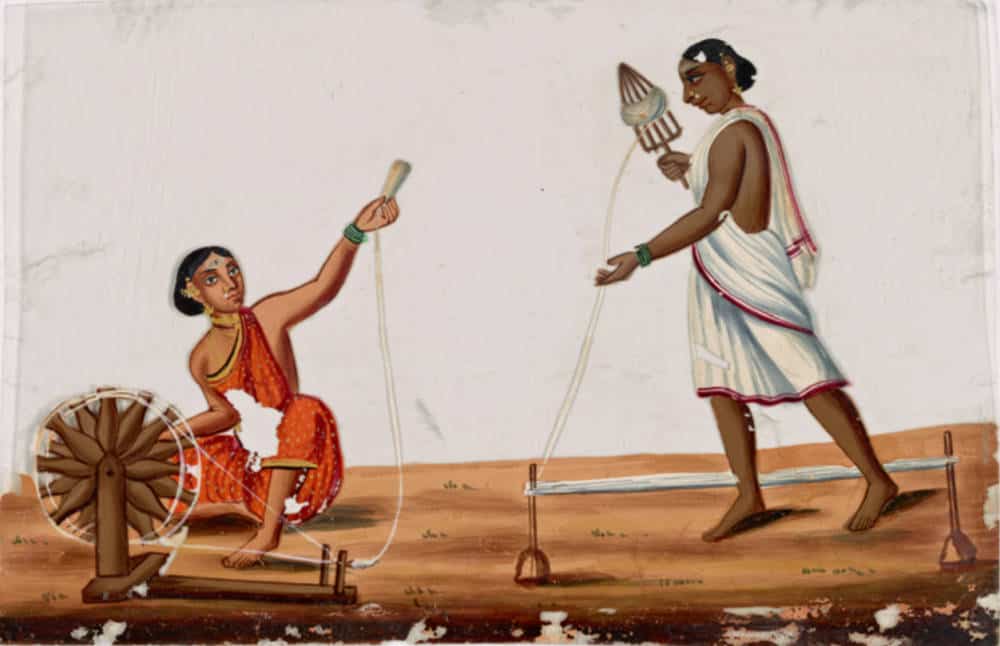
Few industries in India carry as much historical weight as textile manufacturing. From the handloom traditions of ancient trade routes to the mechanised spinning mills that defined early industrial India, fabric has always been woven into the country’s economic identity. Today, this heritage is being reinterpreted through the lens of modern investing, and those who closely follow textile stocks are beginning to recognise that the sector’s best years may still lie ahead. The evolution of Trident share price across different economic cycles has served as an illuminating case study — showing how a company deeply rooted in traditional manufacturing can remodel itself for the demands of contemporary capital markets while staying true to the fundamentals that originally built its business.
From Traditional Craft to Industrial Scale
India’s journey from cottage-level textile production to globally competitive industrial manufacturing has taken well over a century. Along the way, the industry has absorbed technological revolutions, policy shifts, and significant competitive pressure from low-cost producers in other parts of the subcontinent.
What survived this long arc of change is a core manufacturing capability that remains genuinely world-class in certain product segments. Indian home textiles, in particular, have earned a reputation for quality that allows domestic manufacturers to compete effectively in premium product categories. The companies that emerged strongest from decades of competitive pressure are those that invested consistently in technology, worker skills, and process standardisation — qualities that cannot be replicated overnight by any new entrant, regardless of the capital they deploy.
The Role of Government Policy in Shaping the Sector
Policy support has played an important role in determining the fortunes of Indian textile manufacturers across different periods. The Production Linked Incentive scheme introduced in recent years has been one of the more significant government interventions — designed to encourage large-scale investment in manufacturing capacity and technology upgradation across the textile value chain.
Beyond the PLI scheme, policies around technology fund upgradation, export promotion, and infrastructure development in textile clusters have contributed to improving the sector’s competitiveness. Reduced logistics costs following improvements in road and port infrastructure have also benefited manufacturers with large export businesses. For investors evaluating the sector’s long-term potential, the alignment between government policy priorities and the natural strengths of Indian textile manufacturing is a positive structural backdrop that adds a layer of confidence to fundamental investment decisions.
Domestic Demand as the New Growth Engine
For much of its recent history, Indian textile manufacturing has been shaped heavily by export demand. Large institutional buyers, hospitality chains, and retail distributors in global markets have provided the volume that justified significant capital investment in spinning and weaving capacity. But the domestic demand story is increasingly becoming one that investors can no longer afford to overlook.
India’s middle class is expanding rapidly, household incomes are rising, and aspirations around home aesthetics are evolving. Consumers who were once satisfied with generic products are now actively seeking out branded, quality home textiles for their homes. This shift — from a purely functional purchase to one that carries elements of lifestyle aspiration — is expanding the addressable market for quality domestic manufacturers at a pace that is genuinely exciting from an investment standpoint.
Export Competitiveness and Quality Standards
The ability to consistently export to large and conscious markets requires more than just competitive prices. It needs to adhere to strict environmental and social governance standards, reliable shipping timelines, and the ability to innovate in terms of product design and capabilities. Indian manufacturers, which have built up those capabilities over a long period of time, maintain a sustainable advantage that newer players are struggling to replicate quickly.
Certificates related to sustainable production, chemical compliance and ethical working practices have become table share requirements for accessing export markets at top interest rates. Companies that have actively invested in meeting these requirements are in a good position to maintain and grow their export relationships over the years. The funding needed to build those efficiencies is huge, but so is the aggressive moat it creates, which represents the real barrier to entry that protects the commercial and business version of mountain operators.
Long-Term Structural Tailwinds for the Sector
Several structural factors contribute to a favourable long-term outlook for the well-positioned Indian textile manufacturers. First, the global shift towards diversification in the distribution chain has opened doors for Indian manufacturers as major international buyers actively seek alternatives to relying on unmarried sourcing geographies. India’s combination of manufacturing scale, quality, efficiency and tariff competitiveness makes it well positioned to capture this changing shift.
Second, fashion with domestic premium customers who trade up to higher quality products in categories, blesses manufacturers with the ability to supply products at better prices. Third, India’s textile sectors continue to invest in infrastructure, logistics and production time.
For the long-term equity investor in India, these tailwinds create a structural bullish story that does not always depend on any unmarried gains or any short-term market events. Industries with the right structural tailwinds, mixed with companies that have the operational capability to leverage them, are the most compelling wealth growth opportunities available in the Indian stock market today.