
Have you ever attempted to visit an Indian site but got blocked during the process? It is quite common and occurs more often than we might think. Sites use IP tracking, and once yours raises a red flag because of an excessive number of attempts or any other reason, you are getting blocked. Here is where Indian proxies can help.
An Indian proxy allows all your traffic to pass through an Indian IP address and make your connection appear as one that comes from India.
In this blog, we’ll break down why IP bans happen, how Indian proxies solve the problem, and what to look for before choosing one.
Why Do Websites Ban IP Addresses?
Websites don’t ban IPs randomly. There’s usually a trigger :
- Too many requests in a short time – looks like bot activity
- Suspicious login patterns – multiple failed attempts or unusual locations
- Geo restrictions – some Indian platforms block foreign IPs by default
- Scraping detection – automated data collection often gets flagged fast
What Are Indian Proxies?
An Indian proxy is one which operates from India and gives you an Indian IP address. Your internet connection does not make a direct connection but makes use of the server first.
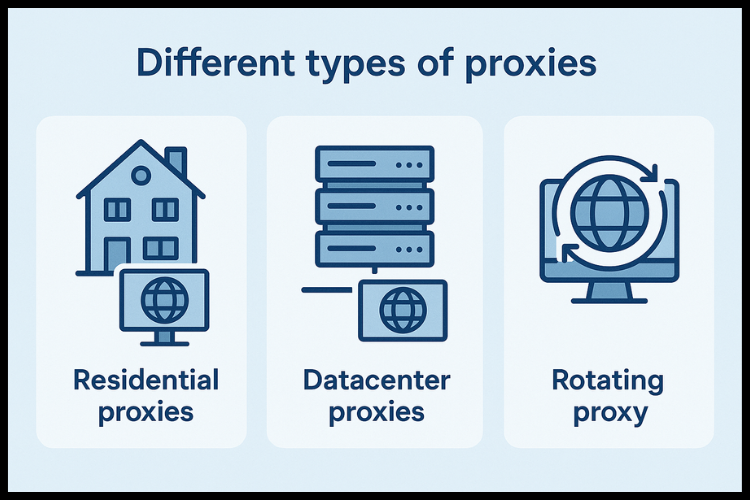
Types of Indian Proxies
- Datacenter proxies – fast, cost-effective, ideal for bulk tasks
- Residential proxies – real ISP-assigned IPs, harder to detect as proxies
- Dedicated proxies – used by one person only, more stable and consistent
- Rotating proxies – IP changes automatically, useful for large-scale scraping
How Indian Proxies Prevent IP Bans
- Distributing Traffic Across Multiple IPs
Instead of hammering a website from one IP, rotating Indian proxies spread requests across many. This avoids the “too many requests” flag entirely.
- Simulation of Real Local User Accounts
Indian proxies that appear residential in nature mimic genuine users accessing websites from their home networks. These are not blocked by any website usually.
- Bypassing Geographical Restrictions
There are some websites in India that only allow access from within India. A local IP solves this instantly, no workarounds needed.
- Supporting Safe Automation
Regardless of whether it is price monitoring, ad verification, or ranking of websites, proxy allows automation without getting detected by any bot detection system.
Common Use Cases for Indian Proxies
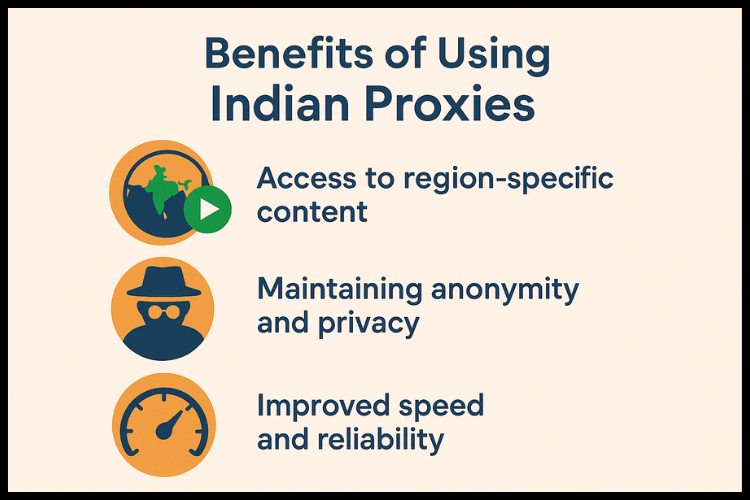
- Web scraping for market research or price comparison
- SEO monitoring to check local search rankings accurately
- Ad verification to see how Indian ads appear to real users
- Account management for multiple social media or e-commerce accounts
- Accessing region-locked content on Indian streaming or news platforms
Choosing the Right Indian Proxy Provider
Not all proxies are equal. Before picking one, check for:
- IP pool size – larger pools reduce the chance of repeated bans
- Speed and uptime – slow proxies defeat the purpose
- Support for rotation – essential for scraping or automation tasks
- Legal and ethical sourcing – residential IPs should be ethically obtained
Conclusion
IP bans are frustrating, but they’re avoidable. India based proxies provide you with a local identity, spread your web traffic, and ensure that you remain unnoticed by any bot detection system. Irrespective of whether you are looking to scrape data, maintain multiple accounts, or simply access India exclusive sites, the right proxy configuration becomes essential.
Looking for reliable Indian proxies? Check out our proxy solutions designed to ensure fast connectivity and stable online performance.
FAQs
Q1. For what reason do you require an Indian proxy?
The requirement of an Indian proxy is to route the internet traffic through an Indian IP address and it helps to unblock, access location-specific websites and applications, as well as automate actions.
Q2. Can Indian proxies completely prevent IP bans?
Though there is no guarantee for complete protection from ban, the use of rotating Indian proxies helps in minimizing the chances of getting banned since it distributes traffic among different IP addresses.
Q3. What Are Better: Indian Proxies or Datacenter Proxies?
Residential proxies appear to be more realistic and therefore more difficult to identify. Datacenter proxies, on the other hand, are cheaper and faster, but easier to identify.
Q4. Is using Indian proxies legal?
Yes, using proxies is legal in India. But, how you use them – either to scrape or automate actions or bypass restrictions – must adhere to each site’s terms of service.
Q5. How can Indian proxies help during web scraping?
The Indian proxies split the request among many IP addresses and mimic the activities of real users. It assists scrapers to remain hidden and also prevents being blocked at the same time when they are scraping huge volumes of information.
Q6. Do I need rotating proxies for SEO rank tracking?
Yes, rotating Indian proxies are recommended for SEO tracking since repeated requests from a single IP can trigger search engine blocks.
Q7. What should I check before buying Indian proxies?
Look at IP pool size, speed, uptime, rotation support, and whether the provider sources residential IPs ethically.