Sim racing is no longer just entertainment—it has become a powerful training tool for developing real-world driving skills, sharp reflexes, and faster decision-making. With realistic physics, responsive controls, and high-pressure training environments, it sharpens reflexes, enhances coordination, and builds smarter driving habits. Discover how this powerful virtual training tool develops better reaction time, confidence, and technical ability behind the wheel.
Sim racing has rapidly transformed into a sophisticated training system that significantly improves real-world driving skills, enhances reflexes, and sharpens mental focus. Powered by realistic vehicle physics, visually accurate track environments, and advanced force-feedback steering systems such as the Simagic GT NEO, modern simulation platforms create an immersive and controlled environment for practising safe yet challenging manoeuvres. Unlike traditional training methods, sim racing enables continuous improvement without physical risk, helping drivers master braking precision, corner control, spatial awareness, and quick decision-making. This detailed guide explores the practical benefits of simulation racing and why it has become an invaluable tool not only for motorsport enthusiasts but also for everyday drivers seeking confidence and technical accuracy on the road.
A New Era of Driver Training
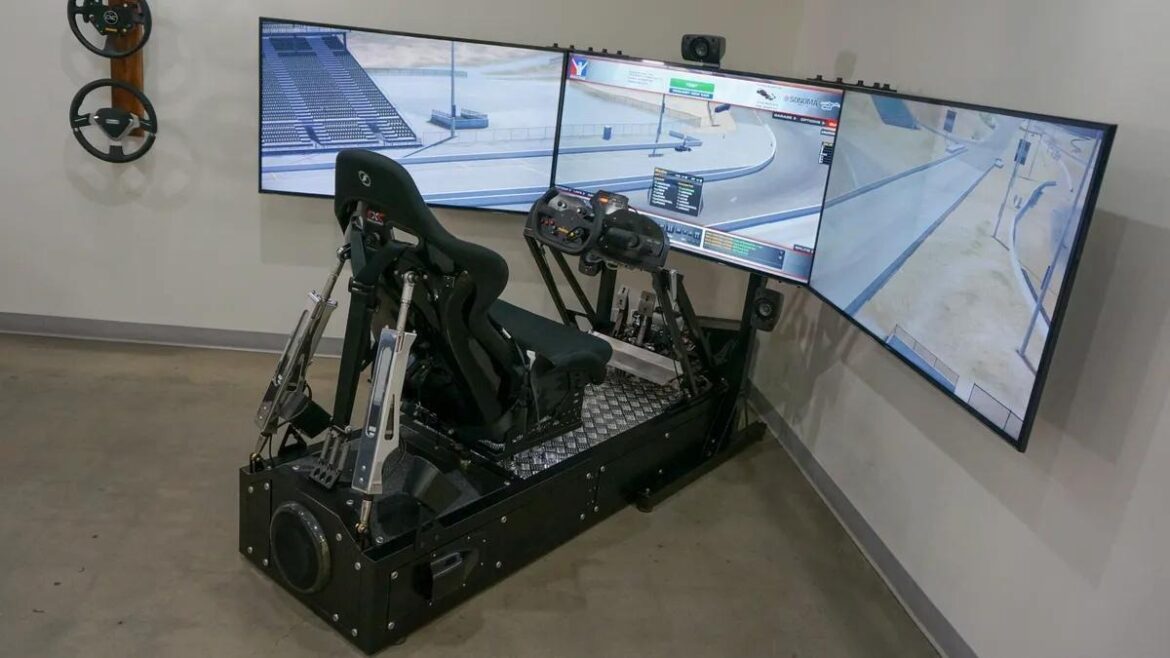
Sim racing has evolved far beyond casual gaming. Today, it functions as an advanced learning platform that mirrors the real dynamics of vehicle behaviour, track design, and decision-making under pressure. The combination of professional-grade racing simulators and responsive steering technology—like the Simagic GT NEO—gives users the ability to feel tyre grip, weight transfer, surface vibration, and steering resistance as if they were controlling a real car.
This high level of sensory realism is driving a global shift toward simulation as a serious training tool. From reaction time and control precision to mental discipline, the skills practised in virtual environments carry significant value when transferred to real roads.
Why Simulation Builds Stronger Drivers
Real-world driving demands constant coordination between the brain, the eyes, and the hands. Sim racing recreates this complex environment, requiring split-second decision-making while managing speed, steering adjustments, and situational awareness. Unlike static driver training, simulation continuously adapts and challenges the brain to perform under pressure.
Sharper Reflexes and Faster Response Time
Sim racing exposes drivers to unpredictable situations—tight corners, sudden obstacles, reduced visibility, or changing track surfaces—encouraging instant reactions. Repeated practice forms faster neurological response patterns, improving reflex behaviour. This translates to safer and more controlled real-world reactions, such as responding quickly to sudden braking or avoiding collisions.
Improved Coordination and Control
Hand–eye coordination is crucial for smooth, precise driving. Simulation requires drivers to watch the track carefully while managing throttle, braking, and steering with accuracy. Equipment like the Simagic GT NEO, providing tactile feedback and realistic wheel resistance, strengthens muscle memory and enhances control skills, promoting steadier and more confident steering.
Developing Smarter Driving Techniques
Beyond reflexes, sim racing encourages structured thinking and measured responses—qualities essential for safe road performance.
Mastering Braking and Cornering
Sim racing platforms teach drivers to evaluate braking points, adjust speed effectively, and take the correct driving line through corners. Learning how different speeds and weight shifts affect grip helps drivers remain stable and predictable on real roads, reducing unnecessary risk.
Anticipation and Situational Awareness
Success in sim racing depends not just on reacting, but on reading the environment. Drivers learn to anticipate obstacles, judge distances, and plan several moves ahead. This proactive mindset promotes safer driving habits such as maintaining distance, checking blind spots, and adjusting early for road conditions.
Composure Under Pressure
Driving under stress triggers emotional responses that can lead to poor decisions. Sim racing reproduces competitive, fast-paced, and information-heavy scenarios that require controlled breathing, concentration, and resilience. The ability to perform calmly in intense conditions transfers directly to real driving safety and discipline.
Scientific Support for Simulation Training
Research suggests that simulation-based driving practice can reduce reaction time by up to 25% while significantly improving brain processing speed and spatial judgment. High-speed training environments activate neural pathways responsible for attention, decision-making, and memory retention. When combined with physical feedback hardware, skill development becomes long-lasting and highly transferable.
Key Driving Skills Strengthened Through Sim Racing
- Smooth steering control and consistent handling
- Faster response to unexpected events
- Braking accuracy and distance prediction
- Cornering stability and throttle regulation
- Environmental awareness and anticipation
Practical Tips for Improving Results
- Set training goals rather than driving aimlessly; focus sessions on individual skills.
- Increase realism settings such as tyre wear and track conditions to improve challenge.
- Use high-feedback equipment, as hardware like the Simagic GT NEO enhances sensory learning.
- Record and review laps to identify weaknesses and measure growth.
- Gradually raise difficulty to keep improving without feeling overwhelmed.
Final Takeaway
Sim racing is far more than a digital pastime—it is an accessible, cost-effective, and highly impactful method of building real-world driving competence. Through realistic environments, physical feedback technology, and cognitive conditioning, simulation racing strengthens essential skills such as reflex sharpness, precise control, and confident decision-making. As the line between virtual and physical driving continues to narrow, more drivers are using simulation to enhance safety, performance, and overall road awareness. If you are looking to improve your driving ability, sharpen your reaction time, or take control technique to the next level, exploring the world of sim racing is a smart and rewarding step. Start training with purpose, and you will feel the benefits wherever the road leads.